This was what my buddy from NYC said to me yesterday on the phone, because he’s got a new SRAM transmission and he now finds himself in the big ring more than before (SRAM have unusual sizing, like 48-35 or 46-33).
We’ve all lived through the exponential growth of cassettes these past 15 years or so, so it makes sense that chainrings get adjusted, but I thought I’d take a dive back in time to see what was standard in the past, just to make me feel like a complete and utter wuss.
1975: This is probably around the time my friend was racing. The typical road bike ran 52/42 on the front and a 5-speed (5 speed!) 14-26 freewheel.

1981: When I got my first 10-speed: The same 52/42 and a 6-speed 13-26 on the back.
1996: The year I rode across Australia: If you had a double (triples were popular) it was probably 53/39 and an 8-speed 12-25.
2008: When I got into road cycling in France: Compact was becoming popular, so I had a 50/34 and my first Campy cassette was 12-27, I think (I infamously rode Haute Route Alps with a 25, which was very dumb).
I guess that 50/34 is still the most popular today, but that’s all going to change once the range of cogs on the cassette grows even more. And now to make us all feel like little whiny kids, let’s go back to 1975 and the easiest combo on your bike – 42/26. The equivalent of this ratio with a 34 chainring is 34/21. Imagine trying to climb Mont Ventoux in a 21, not to mention your bike probably weighed 2kg heavier. It’s no wonder the average cadence was around 30rpm!
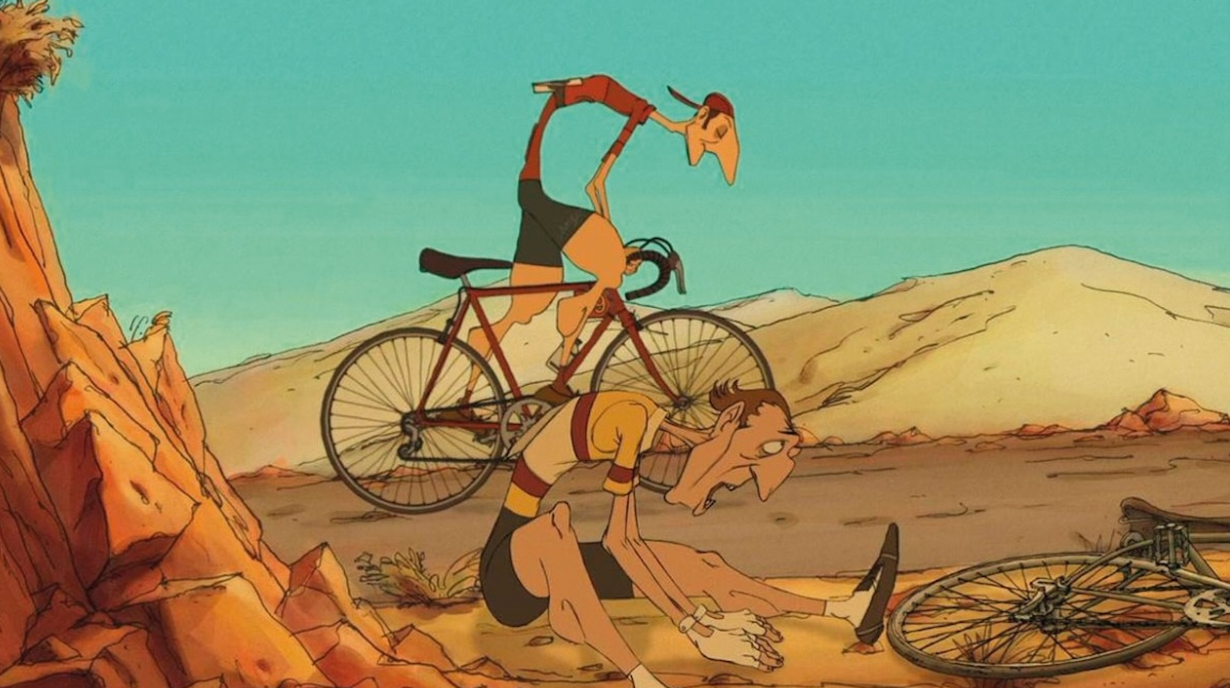
 The Vicious Cycle
I wouldn’t like to say how many cogs there are in my Rohloff Hub but I am very happy with it.
Connected (punny) to the chainrings and cassettes, the third thing that’s changed a lot, is crank arm length. With more capacity in the derailleur we don’t need massive leverage to turn the pedals. I think I read the Pantani had 185mm cranks on his climbing bike
That’s something I never thought about, i.e. the actual reason why crankarms might be getting shorter.